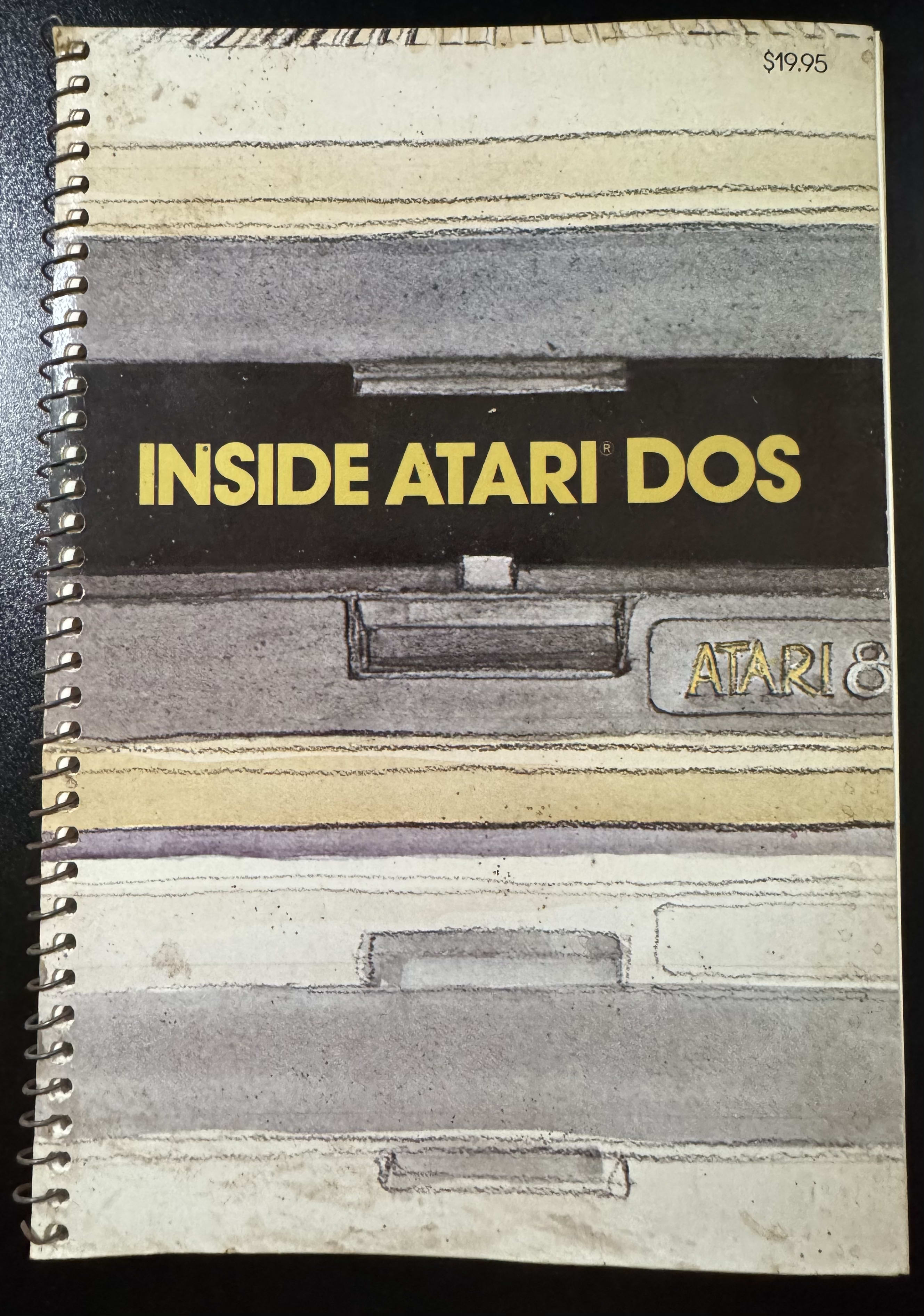
This is a thin, 120-page book that basically consists of two sections, the first of which describes Atari DOS routines and commands in about 58 pages.
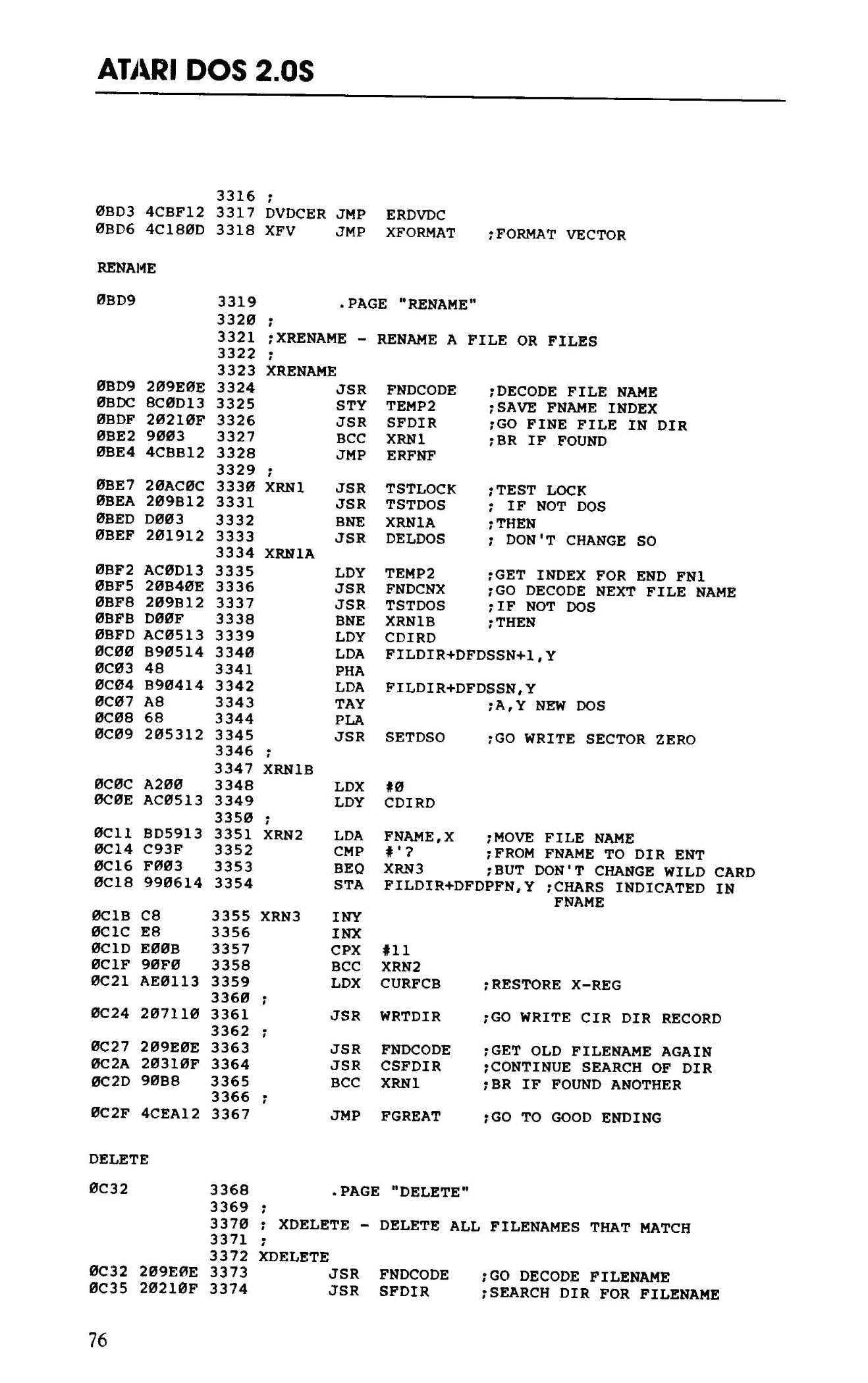
The second part of the book is the commented assembly code listing of Atari DOS 2.0S. Publishing source code in this manner was not all that common in the early 1980s, so this was a somewhat unique book at the time. At $19.95 (about $67 in 2025), it was also not all that cheap.
As most know by now, DOS is an acronym for Disk Operating System. Although the Atari OS that was built in to the ROM had the ability to access a floppy disk, it was just rudimentary sector IO and was not a full DOS with routines and commands for dealing with files, directories or organization.
The first version of Atari DOS was, appropriately, 1.0. It loaded everything in memory, including the file management system (FMS) and the menu system (later called DUP, for Disk Utility Package). This took up too much RAM on these RAM-starved early computers, so the design was quickly changed for Atari DOS 2.
With Atari DOS 2, things were split into two separate parts. The FMS (DOS.SYS) file would be loaded automatically from disk. To get to the menu, you would type DOS from BASIC, which would then load DUP.SYS, clobbering any BASIC program you had in memory.
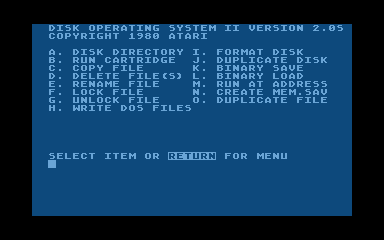
If you booted without BASIC (which was a cartridge on the 400/800/1200XL) then you’d go directly to the DUP menu.
On the newer XL and XE computers, you would hold down Option when turning on the computer disable BASIC.
For the most part, Atari disks were formatted with 720 sectors. Each sector contained 128 bytes, for a total of 92,160 bytes, or 90K. If you were lucky enough to have a double-density floppy drive, then each sector could contain 256 bytes for a total of 180K.
The weird Atari 1050 drive as a single-density drive that could store about 1020 sectors.
The Volume Table of Contents (VTOC) tracked the sectors that were in use on the disk. This is analogous to the File Allocation Table (FAT) on DOS disks. The disk directory stored the name of the files on the disk on sectors 361 to 368.
You can often find dumps of Atari disks as ATR files on the internet. I made a simple utility that can show you the contents of the disk by directly reading the disk directory, which you can download here:
There were many version of DOS available for the Atari, but they mostly used the same disk format and were backwards compatible with Atari DOS. They instead were primarily differentiated by their UI, rather than DOS.SYS, which could mostly be considered a floppy disk driver. A popular exception to this was SpartaDOS which had a completely different disk format and many more powerful commands and capabilities.
Here’s the link to the book if you have a hankering to read some commented assembly code today.
At the very least read the great introduction by Bill Wilkinson. He tells a short story about how Atari hired Shepardson Microsystems (the company he worked for) in 1978 to create both a DOS and BASIC for their upcoming 8-bit personal computer.
An interesting bit of trivia is that Shepardson Microsystems also created the original Apple DOS.
You Might Also Like
Go to Source
Author: Paul Lefebvre
About The Author


